

Weekly FinTech & Financial News
Subscribe to our Weekly Newsletter
✉️
Subscribe to our Weekly Newsletter ✉️
August 3-7, 2026
Top FinTech Updates this Week
🤝 Nuvei, a Montreal-based payment infrastructure provider partnered with BlackLine, US-based trust infrastructure for Agentic Financial Operations to embed payment acceptance within BlackLine's invoice-to-cash platform for enterprise customers
🤝 Chexy, Toronto-based rent and bill payment platform expanded its partnership with Air Canada’s Aeroplan to launch Canada’s first mortgage rewards program, allowing homeowners to earn travel rewards on their monthly mortgage payments
🚀 Western Union launched Stablecard, a digital wallet and USDPT-backed Visa card in partnership with Rain
💼 Mastercard completes acquisition of BVNK to advance global stablecoin capabilities in how people and businesses exchange value by enabling interoperability across fiat and digital currencies
💼 TMX Group Limited closed its acquisition of Cboe Australia, now rebranded as TMX Australia Exchange, marking it's first major foothold in the Asia-Pacific capital markets region
Top Financial Institutions Updates this Week
🚀 CIBC launched its proprietary agentic AI workspace, CIBC AI 2.0 (CAI 2.0), the first of its kind in Canadian banking
🚀 CIBC launched a proprietary, AI-enabled solution, CIBC AdvisorAssist, that helps advisors spend less time on administrative work and more time on client conversation, advice and relationships while integrating important regulatory compliance activities
🚀 Scotiabank introduced the expansion of its enterprise AI resources with the introduction of new knowledge agents available through Scotia Intelligence, the Bank's unified approach to data and AI
🌟 Bank of Canada launched its Enforcement Decisions page and issues its first enforcement actions under the Retail Payment Activities Act, publishing five notices of violation against unregistered payment service providers while imposing $0 monetary penalties
🌟 TD Bank Group introduced its enterprise-wide Responsible AI Principles, reinforcing the Bank's commitment that innovation is to be guided by strong oversight, transparency and accountability
-
BVNK provides the infrastructure that supports fiat and on-chain payments behind the scenes — enabling people, businesses and machines to hold, move, manage and convert value across fiat and digital currencies within a framework of security, compliance and interoperability. Bringing BVNK’s technology and deep industry expertise together with Mastercard’s capabilities will help financial institutions, FinTechs and enterprises scale use cases powered by stablecoins and tokenized assets — from cross-border B2B payments and payouts to settlement and treasury flows. | Mastercard
The acquisition of BioCatch complements Visa’s existing cyber, fraud, risk and security solutions and is expected to help clients better protect themselves and their customers from the growing threat of account takeovers, scams, money mules and application fraud. Since its inception, BioCatch has developed innovative AI and machine learning-based solutions that analyze thousands of application, behavioral, device, and network signals—such as keystrokes, touch gestures, and device handling—to detect fraud and distinguish legitimate users from fraudsters in real time. BioCatch protects 1.8 billion devices and 760 million users around the world, serving more than 350 banking clients in 21 different countries, including more than 100 of the largest banks globally. | Visa
The partnership is already live with enterprise customers, according to the companies. Through the process of combining BlackLine's invoice presentment and payment functionality with Nuvei's payments infrastructure, the two companies aim to close this gap. Under the partnership, customers can settle an invoice at the point of receipt, with the payment automatically matched to the corresponding receivable. Through the integration, enterprises using BlackLine can accept cards, bank transfers, and local payment methods directly on an invoice. In addition, incoming payments are matched to open receivables without manual keying, while payment status and cash position can be tracked in real time. Payers are given a single interface through which to view, query, and settle an invoice. | The Paypers
This solution allows users in 37 markets to receive, hold, and spend stablecoin value globally, providing a hedge against local currency volatility through the Solana blockchain. Stablecard addresses the critical issue of local currency fluctuation by allowing users to hold value in USDPT, a stablecoin redeemable 1:1 for U.S. dollars. By integrating with the Solana blockchain, Western Union enables users to protect their earnings from inflation while maintaining instant spending power. Key features include: Direct receipt of Western Union transfers into a digital wallet; Full backing by U.S. dollar reserves via Anchorage Digital Bank and Compatibility with Apple Pay and Google Pay for seamless retail use. | Fintech Finance News
This collaboration focuses on reducing friction in the checkout experience while providing businesses with the data-driven tools necessary for international growth and operational efficiency. By integrating Mastercard’s global network with Fiserv’s merchant platforms, businesses can access unified commerce tools that simplify how they accept payments in multiple currencies. Key benefits include: Faster settlement times for international transactions; Enhanced fraud detection capabilities using AI-driven insights and Access to contactless payment technology across new geographic regions. This integration ensures that small business owners and large enterprises alike can deploy innovative payment methods without the need for multiple disparate providers. | Merchant’s Eye
-
It came after the company allegedly mismanaged millions of dollars in client crypto assets. Operating from 2019 until 2024, Catalyx was shut down in December of 2023 by a cease-trade order from the ASC, following a security breach that resulted in the loss of millions of dollars in cryptocurrency assets. Under that order, the company was prohibited from purchasing or trading securities or derivatives until January of 2025. Shortly after that order was delivered, the company announced it would suspend all withdrawals from its platform. In January of 2026, Catalyx formally entered into receivership. Catalyx was penalized by the ASC for the failure of its CEO, Hyuk Jae Park, to notify the ASC of the assets breach until Dec. 21, 2023, after discovering it in November that year. | BetaKit
-
Under its new retail payments oversight regime, issuing five notices of violation to payment service providers that failed to register as required. Although the violations were classified as "very serious," the central bank imposed no financial penalties, signaling a supervisory approach focused on compliance and reputational accountability while reinforcing its commitment to active oversight of the payments sector. | Bank of Canada
This change to the credit card management system is more than just a technological update. It’s a shift that is intended to better equip Desjardins to meet the needs of members and clients today and in the years ahead. With the new system, cardholders will eventually be able to do things like adding a new card to their digital wallet immediately without waiting to receive the physical card first in the event of a loss or theft. They’ll also have the option to dispute transactions themselves using AccèsD. New self-service features for business members will also be introduced in the future, including the ability to assign roles to employees, add credit cards to the online management platform or modify credit limits. | Desjardins
CAI 2.0 puts the power of agentic AI into the hands of team members, enabling them to rapidly enhance productivity by assigning complex, multi-step tasks to AI that they otherwise would need to complete themselves. CAI 2.0 introduces a new agentic harness, designed and built by CIBC team members, that enables users to integrate their data and tools into the platform and delegate work to AI-driven agents. These agents can plan, coordinate and complete tasks while team members focus on more strategic priorities and deepening client relationships. For example, while a team member is in a client meeting, CAI 2.0 can independently gather relevant research from multiple sources, organize the findings into a structured report, and prepare a presentation for review, so that materials are ready to refine as soon as the meeting ends. | CIBC
The new tool leverages generative AI to automatically capture and summarize detailed notes during client meetings. It also streamlines follow-up documentation, enabling advisors to reduce time spent on administrative tasks by up to 50% and dedicate more time to client relationships. Developed internally by CIBC's team of experts, and with rigorous safeguards in place, CIBC AdvisorAssist is designed to extend across business lines, from Personal Banking and Imperial Service to Wealth Management. The tool was created through the collaboration of advisors, regulatory supervision, technology, and compliance teams, to leverage AI to deliver innovative solutions for clients. CIBC AdvisorAssist is part of the bank's broader effort to use AI in practical and responsible ways that improve the banking experience for clients, drive efficiency, generate revenue, and reduce risk. | CIBC
The TD Responsible AI Principles establish seven commitments that guide how AI is developed, deployed and used across TD. These commitments address laws that already apply to financial institutions, as well as transparency and explainability, data use and privacy, fairness, quality and accountability, reliability, and security. TD is also incorporating the Responsible AI Principles into employee education programs, helping colleagues understand expectations related to the responsible use of AI at the Bank. These Responsible AI Principles establish clear expectations for fairness, transparency, explainability and accountability, while the Bank's governance and risk-management processes require the consistent application of those principles across AI use cases. TD is embedding these Responsible AI Principles throughout the lifecycle of its AI systems, from initial design and development through deployment and ongoing monitoring. Every AI use case introduced at TD must align with these principles and undergo assessments for explainability, fairness and performance development. | TD
The latest deployments are designed to: Help employees access institutional information and apply specialized expertise to execute work more efficiently; Embed AI more deeply into the Bank's everyday operations to help teams navigate internal processes and relevant internal guidance faster; Support employees in focusing on higher-judgement client-facing work. As Scotiabank has moved from experimentation to enterprise-wide scale, its AI strategy has remained anchored in three strategic themes: elevating client experiences, delivering speed and efficiency, and enhancing risk management. The Bank's newest knowledge agents bring that strategy directly to employees by putting information from approved internal sources within reach so teams can spend less time hunting through internal documents and more time on higher-value work that serves clients. | Scotiabank
-
The operator of several Canadian markets including the main Toronto Stock Exchange along with the TSX Venture Exchange and TSX Alpha Exchange, agreed in April 2026 to purchase both Cboe Australia and Cboe Canada from Cboe Global Markets for a combined US$300 million (approximately C$409 million) at the time of the announcement. TMX was not the only Canadian exchange operator interested in the Cboe assets. The Australia transaction has now closed; the Cboe Canada acquisition remains pending regulatory approvals. The Australian exchange will now operate as TMX Australia. | Wealth Professional
-
The round is co-led by Forgepoint Capital International, BNPP SIVF, and Bullhound Capital, with additional commitments to date from investors including Santander Alternative Investments, Tikehau Capital, HP Inc., Orange Ventures, Scania Invest, Qatar Development Bank, Zouk Capital, SETT, EIC Fund, the Basque Government’s Hazten Scale-Up Fund (Gestión de Capital Riesgo de Euskadi - Grupo Spri), and Kutxa Fundazioa.The round is structured around two converging theses. The first is AI on the edge: device manufacturers and infrastructure operators — who collectively reach hundreds of millions of end users and enterprises — believe that the next generation of AI has the potential to run directly on devices, not only through data centers, and that CompactifAI is the technology that can make it possible. The second is efficient and sovereign AI at scale: sovereign and infrastructure investors believe that the AI industry's path forward runs through facilities that do twice the work on half the energy, and that Multiverse and CompactifAI models are the software stack uniquely positioned to power them. | Multiverse Computing
CBIV is targeting $125M USD for the fund, and it hopes to secure it by the second half of 2027. Limited partners (LPs) include German national development bank KfW, the Skoll Foundation, Capricorn Investment Group, Ceniarth, Equality Fund, RockCreek Group, and Wire Group, as well as unnamed family offices and high-net-worth investors. Launched in 2021, CBIV invests in women and youth-focused healthtech companies with strong global commercial potential, including in emerging markets. With the second fund, CBIV will continue to write Series A and Series B cheques between $2 million and $5 million USD into roughly a dozen companies making biotech, medical device, diagnostics, and other healthtech plays with a global lens. | BetaKit
Though the firm did not share a full list, it includes returning Canadian backers Fonds de solidarité FTQ, Investissement Québec, Desjardins, Teralys Capital, as well as some Canadian banks—a “small subset” of the Canadian LP base. European backers included Italian sovereign wealth fund CDP Equity, France’s Swen Capital Partners and Groupe ADP, as well as the pension fund of the States of Guernsey. The team plans to build on White Star’s previous fund strategy—leading rounds at the Series A and Series B stages, writing cheques of between $5 million and $15 million USD, and reserving about half the fund for follow-on investments. It has already invested in eight companies, including Montréal’s investment intelligence platform Tetrix. | BetaKit
-
Aeroplan members can earn one point for every dollar in mortgage payments made through Chexy using their bank account. The service works with virtually every Canadian mortgage lender and does not require homeowners to switch banks, refinance or change mortgage providers. Members working toward Aeroplan Elite Status can also earn one Status Qualifying Credit for every five Aeroplan points collected through the program, up to 25,000 SQC per calendar year in Aeroplan’s Everyday Partners category. The launch brings Chexy into the mortgage category after the fintech built its business around helping Canadians earn rewards on recurring expenses. Chexy began with rent payments and has since expanded its platform to cover obligations including utilities and government taxes. | Fintech.ca
-
Jane welcomed all 53 members of the Ginger Desk team. This appears to be Jane’s first public acquisition of another company, and comes a year after the clinic software provider was set to hit a $1.8-billion CAD valuation, making it a Canadian tech unicorn. According to an April blog post, more than 240,000 practitioners across 40 disciplines use Jane to run their private practices. | BetaKit
This exercise demonstrates the Group’s ongoing commitment to strengthening cyber resilience across the G7 financial sector. A long-term exercise strategy has now been adopted to increase the frequency and consistency of these simulations, thereby enhancing preparedness across all jurisdictions. Through these exercises, the G7 Cyber Expert Group seeks to reinforce the financial sector’s capacity to withstand cyber threats and reduce potential disruptions across G7 jurisdictions. Building on the success of the 2024 CBCE exercise, which aimed to strengthen the G7 financial authorities’ capacity to coordinate and communicate effectively in response to a major cross-border cyber incident affecting the financial sector, this year’s sessions tested key improvements identified through previous simulations and workshops focused on incident response, recovery, and crisis communication, further advancing collective preparedness. To enhance coordination among G7 financial authorities, the exercise simulated a large-scale cyber-attack across all G7 jurisdictions. The scenario brought together ministries of finance, central banks, bank supervisors, and market authorities, fostering a unified response. | Bank of Canada
Complex Questions,
Simple Answers
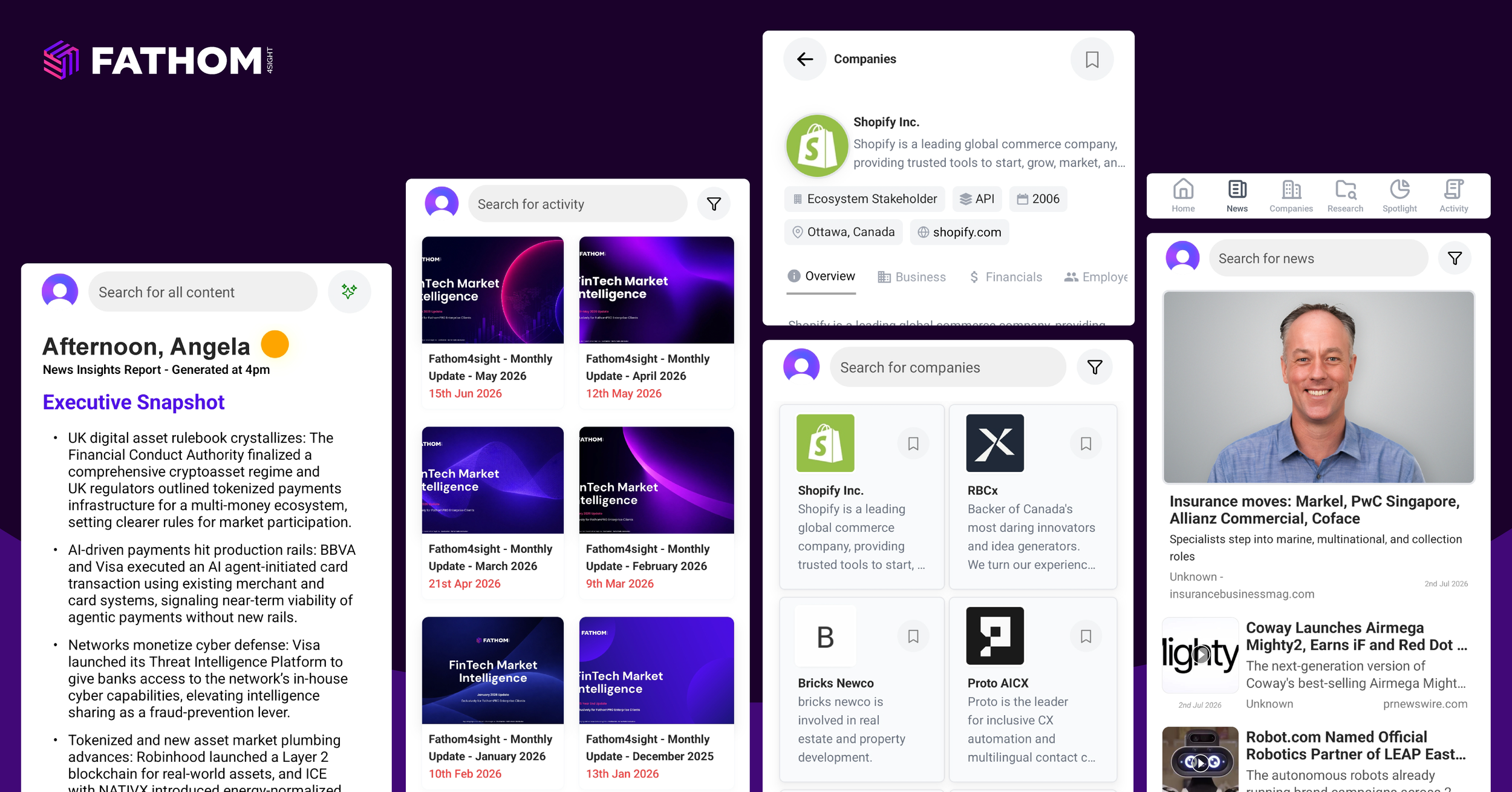
FathomPRO applies advanced financial analysis to reveal critical signals, emerging trends, and tailored, actionable insights. Discover FathomPRO for yourself