

Interac and Kijiji introduce identity verification for P2P marketplace transactions
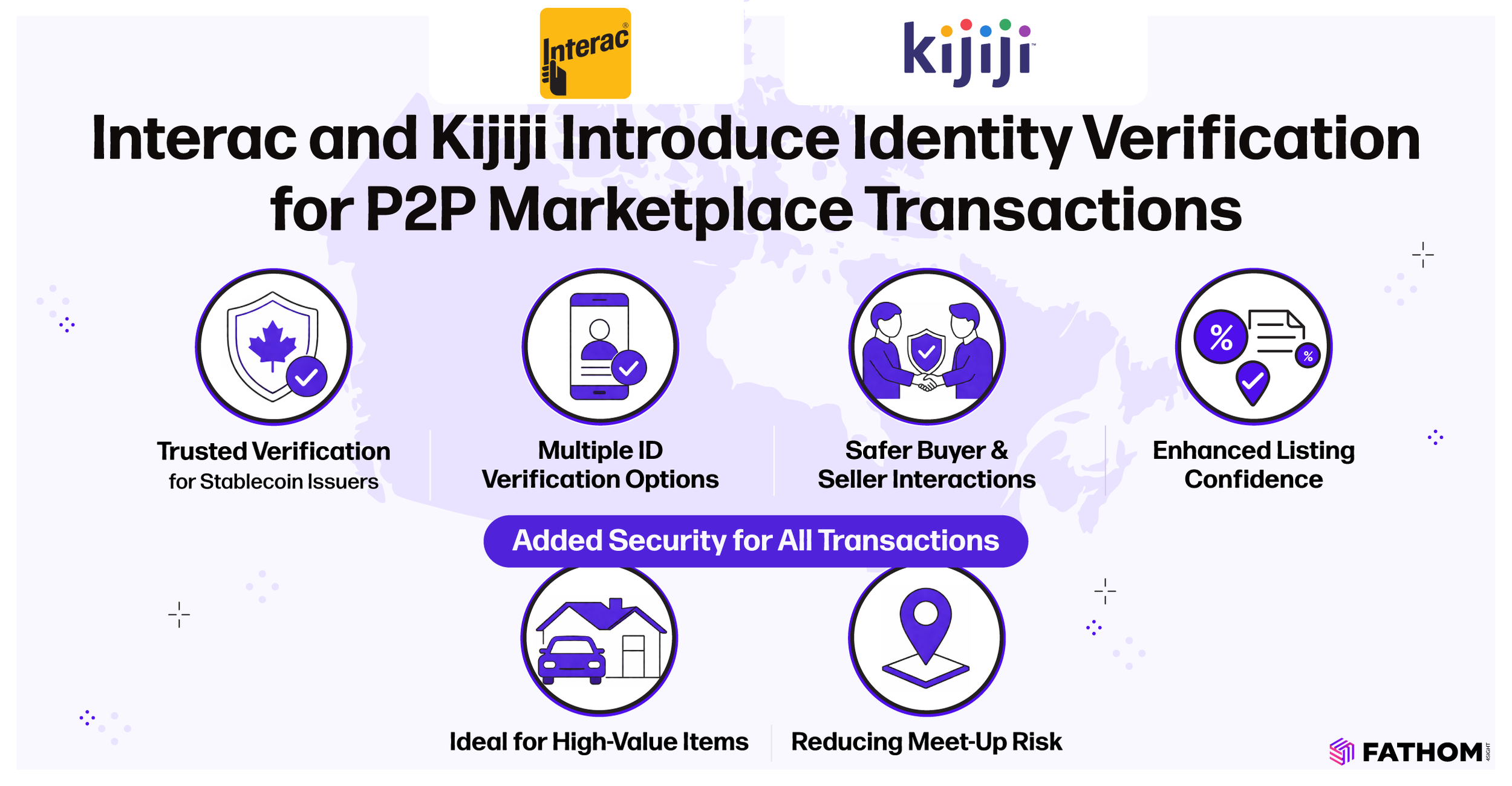
New system adds secure identity checks to support trust and reduce risk in peer-to-peer exchanges.
Interac and Kijiji have collaborated to embed identity verification into one of Canada’s largest peer‑to‑peer marketplaces. Under this initiative, users can verify their identity through a secure system before messaging, listing items, arranging meetings or making purchases, adding a layer of assurance beyond traditional rating systems.
Key Highlights
Expanded trust framework in a high‑volume marketplace: Kijiji hosts more than four million active listings and adds over one million new ones each month, so integrating identity verification is intended to support transactions across categories such as automobiles, real estate and everyday goods.
Use of established verification networks: The system relies on the same infrastructure used by Canadian financial institutions and government agencies, meaning it keeps identity data within Canada’s regulatory framework and leverages existing banking credentials to validate users.
Multiple paths to verify identity: Users with accounts at participating financial institutions can verify themselves immediately; a second option using document verification and liveness checks against government‑issued ID is planned to provide flexibility.
Complementing, not replacing, reputation systems: Verification confirms who a person is while ratings signal how they have transacted in the past, a dual approach that reduces uncertainty, particularly for high‑value exchanges such as vehicles or property.
Confidence tailored to transaction value: For big‑ticket items, verified identity can provide an extra layer of assurance before a purchase; for lower‑value goods like furniture or electronics, it helps reduce the unease of meeting unfamiliar people.
❓ What can be taken from this
The collaboration suggests that peer‑to‑peer marketplaces are moving toward more rigorous verification as a means of sustaining growth and consumer confidence. Integrating identity checks at the point of interaction acknowledges that ratings and reviews alone may not fully mitigate risk and signals that digital marketplaces are aligning closer with financial and regulatory infrastructures to set new expectations for user verification.