

Fiserv Moves Stablecoin Infrastructure Into Live Bank Operations
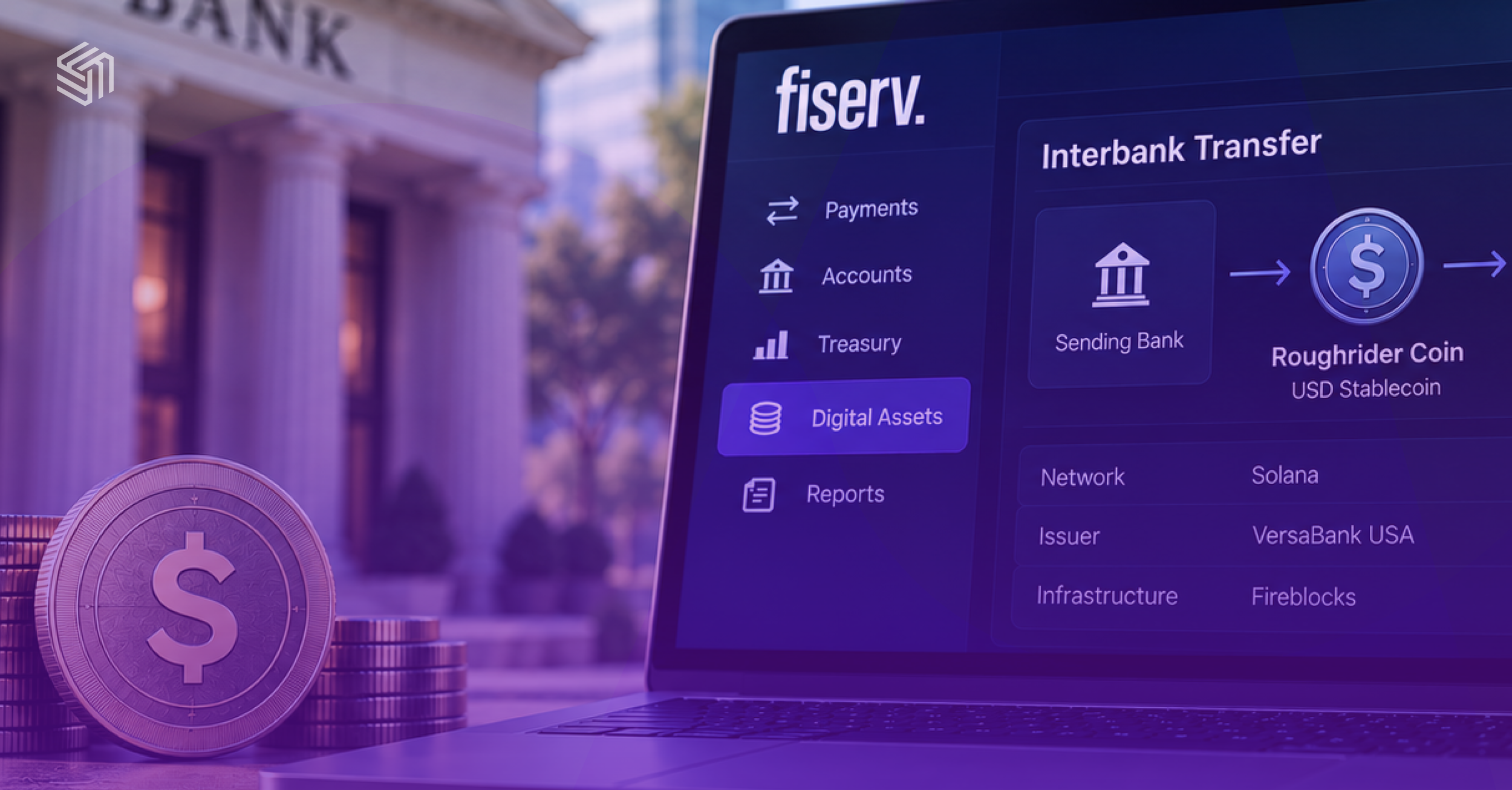
Fiserv’s first live deployment shows how banks and credit unions can access stablecoins through existing banking technology.
Fiserv first reported its digital asset platform and FIUSD stablecoin in June 2025, positioning the infrastructure as a way for financial institutions to introduce digital money within their existing banking and payment systems. Bank of North Dakota followed in October 2025 with plans for Roughrider Coin, a dollar backed stablecoin for its network of community banks and credit unions.
In October 2026, Fiserv reported that the platform had moved into production with financial institution clients. Its first live use case is Roughrider Coin, which is being deployed across Bank of North Dakota's interbank network. More than 90 banks and credit unions can participate, with access provided through Fiserv's existing Commercial Center banking system.
How The Live Model Works
Roughrider Coin: Bank of North Dakota is using Roughrider Coin as a dollar backed digital asset for money movement between financial institutions across its state banking network. Fiserv provides the platform connecting issuance, reserves, custody and settlement into the banking workflow.
Access through Existing Banking Infrastructure: Participating banks and credit unions access Roughrider Coin through Commercial Center, Fiserv's commercial online banking platform already used for traditional interbank money movement. This places the digital asset capability inside an existing bank channel instead of requiring institutions to operate a separate digital asset interface.
Issuance and Reserves: VersaBank USA serves as the issuer, with responsibility for minting and burning Roughrider Coin, holding custody and managing the underlying reserve assets. VersaBank is headquartered in Canada and operates the U.S. business through its federally chartered American subsidiary.
Digital Asset Infrastructure: Fireblocks provides the digital asset and tokenization infrastructure supporting the service. This adds the technology layer required to securely create, manage and transfer the token within the broader Fiserv platform.
Blockchain Settlement: Transactions are processed on the Solana blockchain, providing the underlying blockchain network on which Roughrider Coin moves between participating institutions. The customer facing and bank facing experience remains connected to Fiserv's established banking infrastructure.
Broader Platform Capabilities: Fiserv is positioning the same infrastructure beyond interbank transfers. The Digital Asset Platform is designed to support stablecoin card issuance, international payments, programmable commerce and treasury automation, alongside tokenized deposits and global currency account services, including U.S. dollar accounts for financial institutions internationally.
🚨 What This Signals for the Canadian Financial Sector
The launch provides a useful example of how stablecoins could enter traditional banking through existing financial technology providers rather than requiring each institution to build its own digital asset infrastructure. Issuance, custody, reserves, tokenization, blockchain settlement and bank distribution are being provided by different specialist participants while the financial institution continues to operate through familiar banking channels.
For Canadian credit unions, the model is particularly relevant because it shows how smaller financial institutions could potentially access stablecoin capabilities through a shared technology provider. The institution does not need to become the token issuer or operate the underlying blockchain infrastructure itself.
VersaBank's role also creates a direct Canadian connection. Its U.S. banking subsidiary is providing the regulated issuance, reserve and custody functions behind the first live deployment, demonstrating how a Canadian bank's digital asset capabilities can form part of a broader institutional stablecoin ecosystem.
The larger signal is that stablecoin infrastructure is beginning to move closer to established bank technology stacks. Fiserv is embedding the capability within systems already used by banks and credit unions, which could make adoption more operationally accessible as regulatory frameworks develop.
At the same time, the launch remains an early production example. Fiserv states that more than 90 North Dakota banks and credit unions can participate, but it has not disclosed transaction volumes or the number of institutions actively transacting. The significance today is therefore the move into live banking infrastructure, with broader adoption and economics still to be demonstrated.