

Deloitte Canada and Stablecorp partner to integrate QCAD stablecoin into banking infrastructure
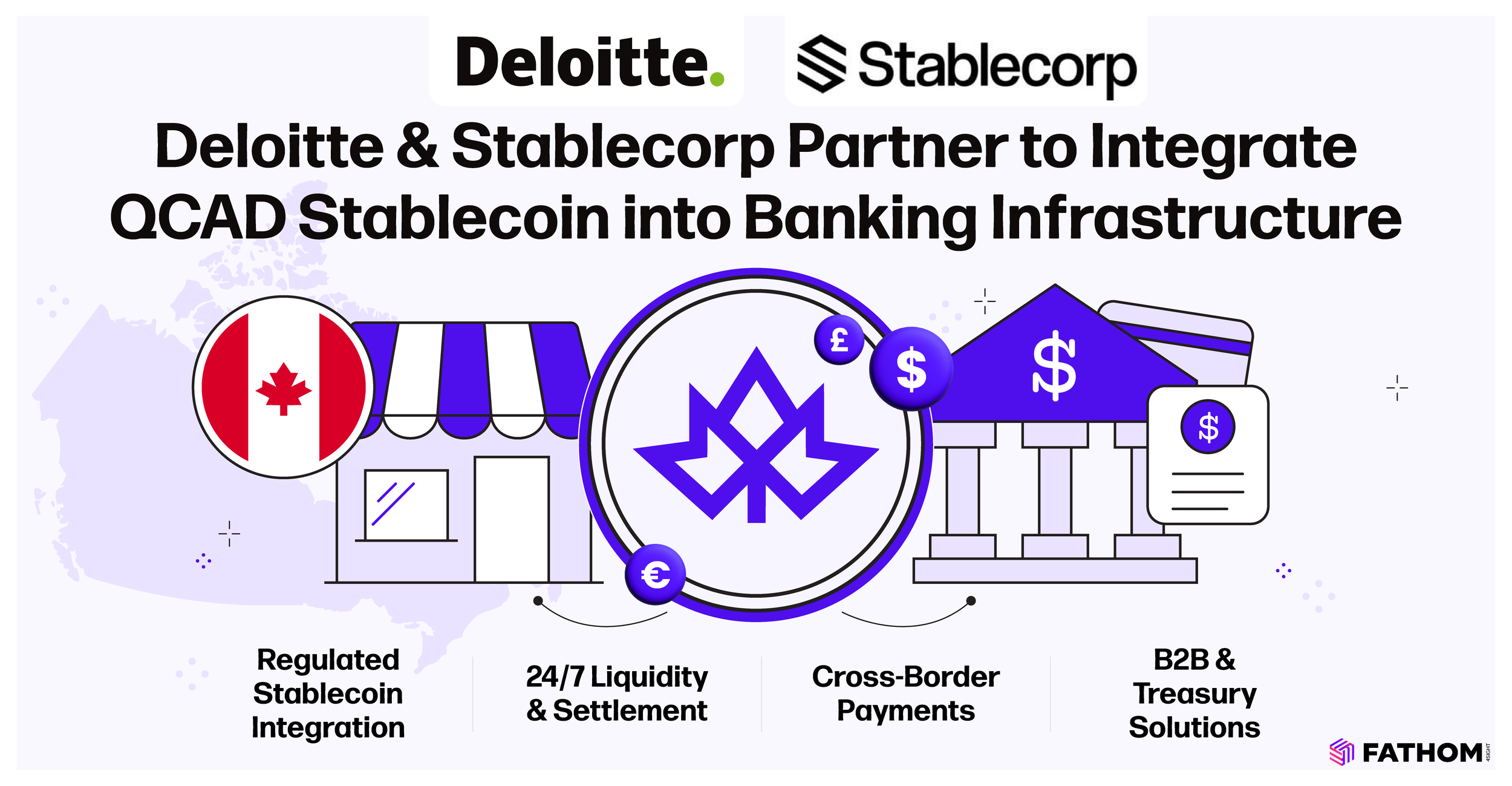
The collaboration focuses on integration with existing platforms and real-time financial operations.
Deloitte Canada is collaborating with Stablecorp to build QCAD-based stablecoin infrastructure for Canadian financial institutions, aligning with the anticipated rollout of Canada’s stablecoin regulatory framework under Bill C-15. The initiative focuses on integrating a regulated Canadian dollar stablecoin into existing banking systems to support real-time, blockchain-enabled financial operations.
Key Highlights
QCAD integration into existing financial infrastructure: The collaboration is designed to embed the QCAD stablecoin within current banking platforms, allowing institutions to adopt digital asset capabilities without replacing legacy systems.
Alignment with upcoming regulatory framework (Bill C-15): The initiative is being developed in parallel with Canada’s evolving stablecoin regulations, ensuring that infrastructure is built to meet compliance expectations from the outset.
Focus on high-friction banking use cases: The partnership targets operational inefficiencies in existing workflows, identifying areas where stablecoins can reduce delays, manual processes, and settlement complexity.
24/7 liquidity and collateral movement: Stablecoin rails enable continuous transfer of assets across institutions and geographies, supporting real-time liquidity management beyond traditional banking hours.
Interbank clearing and settlement optimization: The use of QCAD is expected to reduce settlement times and associated costs in interbank transactions by replacing batch-based processes with near-instant settlement.
Cross-border payment efficiency: The infrastructure leverages blockchain-based transfers to streamline international payments, reducing dependency on intermediaries and lowering transaction costs.
Expansion into treasury and B2B financial flows: Use cases extend to trade finance, working capital management, and on-chain business payments, enabling more automated and traceable financial operations for enterprises.
What this Signals for Broader Ecosystems
This collaboration reflects a shift from experimental digital asset initiatives toward infrastructure-level integration within regulated financial systems. It indicates that stablecoins are being positioned not as standalone products but as embedded rails within existing banking operations, particularly in areas like liquidity, settlement, and cross-border flows. For other markets, this suggests that adoption will likely accelerate where regulatory clarity, institutional partnerships, and interoperability with legacy systems converge.